
AMKAN Access
Develops frameworks, methods and tools, builds competence, organises qualification and practice scopes, and supports quality and traceability.
AMKAN TATWEERAMKAN Access
Accessibility is not a checklist. It is a journey of use that needs trusted professional practice around it.

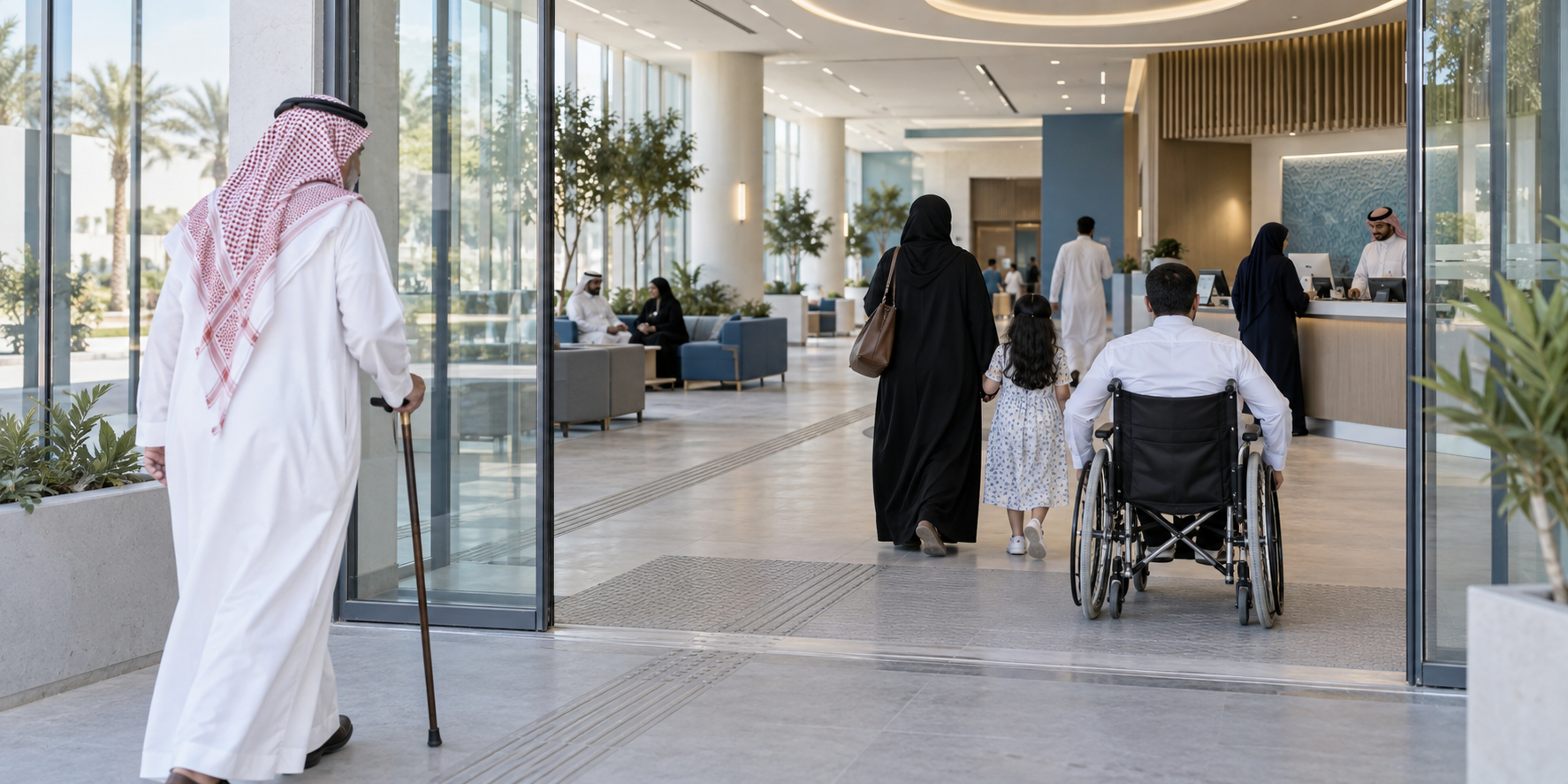
AMKAN Access develops methodologies and tools, builds competence, and qualifies professionals and organisations within clear scopes of practice. It supports consistent professional outputs, documentation, traceability and learning.
This capability enables qualified specialists to help owners, developers, operators and institutions understand barriers, assess environments, develop solutions and make better informed improvement decisions.
The goal is an environment that people can actually reach and use.
An entrance may be suitable while the route to it is inaccessible. Accessible parking may exist without a clear onward journey. Accessibility therefore requires looking at how elements connect and how people use the whole place.
Access succeeds when a person's journey continues, not when individual elements are checked in isolation.
AMKAN Access considers three connected layers: regulatory compliance, accessibility and usability, and inclusive experience. Compliance establishes the technical and statutory baseline; usability examines actual use; experience considers the journey as a whole. Each layer has its own role.
AMKAN develops frameworks and quality mechanisms; qualified specialists perform professional and field work within their roles.
Develops frameworks, methods and tools, builds competence, organises qualification and practice scopes, and supports quality and traceability.
Assesses a design or environment for access and usability, gathers evidence and identifies barriers and priorities within their scope.
Analyses complex cases and develops access strategies and solutions that fit users' needs and project conditions.
Build specialist teams and deliver professional work through qualified practitioners within clear responsibilities.
Qualification within an AMKAN system does not replace a statutory licence or decision by a competent authority.
The starting point may be a new project, an existing building, a service environment or a home whose adaptation relates to a particular person. Specialists define the task, develop an appropriate response and verify outcomes when needed.
Consider accessibility during design and development to find barriers and improvement opportunities early.
Understand the current environment, identify barriers and prioritise changes according to its use.
Examine the relationship between routes, service points, information and how visitors use a place.
Connect a person's daily activities and needs with what can be changed and implemented in the built environment.
Home adaptation brings together expertise in the person and their functional needs with expertise in the built environment, while preserving each profession's scope.
The quality of access is reflected in what people can do within an environment, beyond the count of individual requirements met.
Contact Us About AMKAN Access